In the name of the Father, and of the Son, and of the Holy Spirit, one God, Amen.
One says, “I became a Christian that God would bless me with riches,” while another, “I became a Christian that God would heal my physical pain and comfort my mental anguish,” and another still, “I became a Christian that my life would be made more easy, more comfortable, more enjoyable,” and others, “I became a Christian for cultural reasons, or counter-cultural reasons, or to long for a lost past, or to receive a better tomorrow.” But these are all centred on me, on my wants and my desires, my preferences on life and my hopes for the future: God is incidental in all this, Christ in my life would be optional extra, the Resurrection a mere afterthought.
The Apostle says to us today,
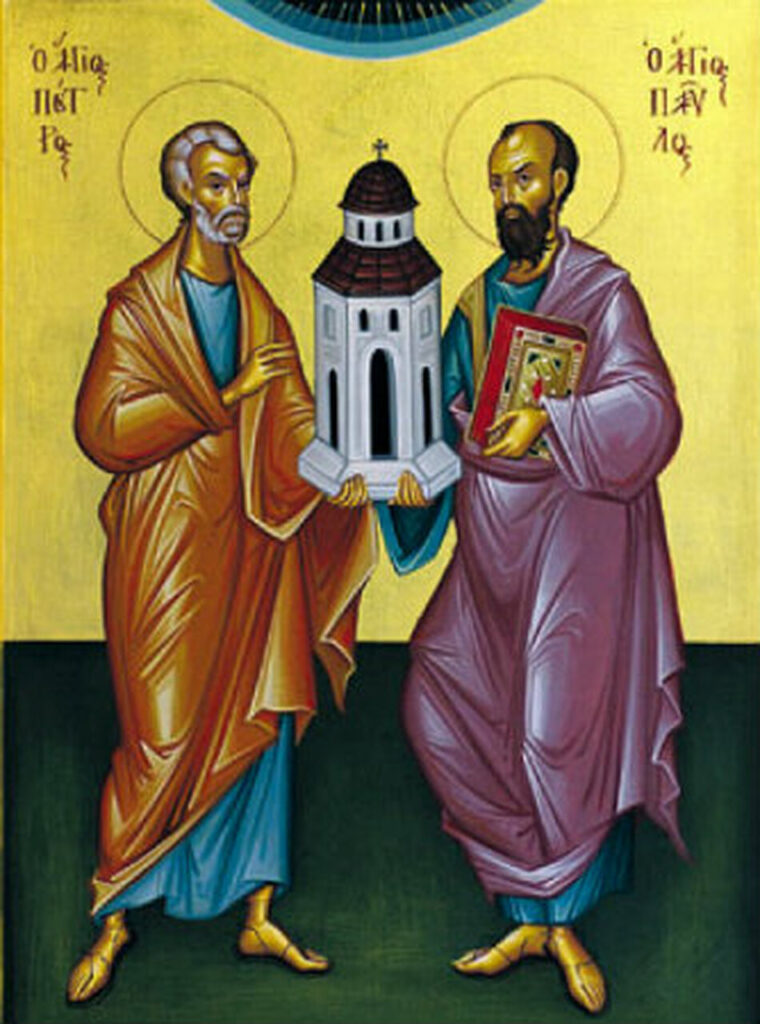
Five times I have received at the hands of the Jews the forty lashes less one. Three times I have been beaten with rods; once I was stoned. Three times I have been shipwrecked; a night and a day I have been adrift at sea; on frequent journeys, in danger from rivers, danger from robbers, danger from my own people, danger from Gentiles, danger in the city, danger in the wilderness, danger at sea, danger from false brethren; in toil and hardship, through many a sleepless night, in hunger and thirst, often without food, in cold and exposure.
These are not said to show off, to prove manliness and masculinity, to demonstrate why St Paul is in charge: these are said as the logical consequence of being a Christian. To be a Christian is to suffer in this world, and if we are not blessed with the dignity of facing outright persecution then ours is to serve, to give, to honour, to sacrifice.
We have witnessed this week the consequences of being a Christian: on the day of the celebration of All the Saints of Antioch, more than twenty were added to their glorious number at the Church of the Holy Prophet Elias in Damascus, many more were wounded because they wished to gather together and worship the living God. His Beatitude John X, Patriarch of Antioch, spoke these words at the funeral of the martyrs.
You, beloved martyrs, have left us and were translated to heaven, to eternal life, in the presence of the Lord Who rose from the dead. You were martyred last Sunday, which is the Second Sunday after Pentecost, a Sunday designated by the Holy Synod of Antioch as the feast of All Antiochian Saints. You were martyred and entered into eternal life on this day, joining the company of all Righteous and Holy Antiochian Saints, and all the saints. Today, we turn to you. We ask you to pray for us, now that you rest in the Lord’s embrace.
— Homily of Patriarch John X At the Funeral of the Martyrs of St Elias Church
I address my beloved ones, my brothers and sisters, the families of the martyrs, the wounded, the sick, and the injured. I extend to you my heartfelt condolences and ask the Lord Jesus to keep you with His divine Right Hand, to bless you, to comfort you, and to grant you patience and consolation. I address the faithful of our parish of St. Elias, where this tragedy took place. I address all our Christian children throughout Syria and across the world. I address every Syrian, whether Muslim or Christian, in this country, because what happened is not an isolated incident, nor a personal act, nor an attack on one individual or one family. It is an attack on every Syrian and on all of Syria. It is an attack specifically on the Christian entity. Therefore, I turn to everyone, asking the Lord God to comfort hearts, to strengthen us, and to keep us steadfast in our faith, in our Church, and in our homeland.
The Apostle Paul says in his Epistle to the Romans: ‘For whether we live, we live to the Lord; and whether we die, we die to the Lord.’ The rock of our faith is the Lord who rose from the dead. And the martyrs who lie before us today are children of the Resurrection; they dwell in the Divine Light. They did not die; they are alive. They have passed on, even if in this horrific way, to the One whom they loved.
…
We pray, dear ones, for our martyrs, our wounded, and their families. We pray for our country and for the entire world. We pray that the future Syria will be the homeland every Syrian dreams of.
This criminal entered the church, being armed and carrying explosives. Our young men—Jiries, Bishara, and Boutros, whom I know personally—saw him. They pulled him back, pushed him away, and threw themselves on him. They willingly accepted to be torn apart, and they were, so they could safeguard those inside the church. This is our people. They are our heroes. They were torn apart to protect, as I was told, 250 people inside the church.
Before this heroic Christian people, I affirm boldly: we do not fear, and we press onward in our journey.
In the presence of the magnitude of this scene, I conclude by affirming that they would have acted likewise to protect those around them, even if they had been in a mosque.
Our prayers are for our martyrs, and we ask for their prayers from wherever they reside in the Divine Light, on our behalf.
The Lord says in the Gospel: ‘Take heart; I have overcome the world.’ He also says: ‘I am in the midst of her; she shall not be moved.’
Thank you all, and may the Lord protect you, He Who is the blessed one forever, Amen.
Brethren, whatever anyone dares to boast of — I am speaking as a fool — I also dare to boast of that. Are they Hebrews? So am I. Are they Israelites? So am I. Are they descendants of Abraham? So am I. Are they servants of Christ? I am a better one — I am talking like a madman — with far greater labours, far more imprisonments, with countless beatings, and often near death. Five times I have received at the hands of the Jews the forty lashes less one. Three times I have been beaten with rods; once I was stoned. Three times I have been shipwrecked; a night and a day I have been adrift at sea; on frequent journeys, in danger from rivers, danger from robbers, danger from my own people, danger from Gentiles, danger in the city, danger in the wilderness, danger at sea, danger from false brethren; in toil and hardship, through many a sleepless night, in hunger and thirst, often without food, in cold and exposure. And, apart from other things, there is the daily pressure upon me of my anxiety for all the churches. Who is weak, and I am not weak? Who is made to fall, and I am not indignant? If I must boast, I will boast of the things that show my weakness. The God and Father of the Lord Jesus, he who is blessed for ever, knows that I do not lie. At Damascus, the governor under King Aretas guarded the city of Damascus in order to seize me, but I was let down in a basket through a window in the wall, and escaped his hands. I must boast; there is nothing to be gained by it, but I will go on to visions and revelations of the Lord. I know a man in Christ who fourteen years ago was caught up to the third heaven — whether in the body or out of the body I do not know, God knows. And I know that this man was caught up into Paradise — whether in the body or out of the body I do not know, God knows — and he heard things that cannot be told, which man may not utter. On behalf of this man I will boast, but on my own behalf I will not boast, except of my weaknesses. Though if I wish to boast, I shall not be a fool, for I shall be speaking the truth. But I refrain from it, so that no one may think more of me than he sees in me or hears from me. And to keep me from being too elated by the abundance of revelations, a thorn was given me in the flesh, a messenger of Satan, to harass me, to keep me from being too elated. Three times I besought the Lord about this, that it should leave me; but he said to me, ‘My grace is sufficient for you, for my power is made perfect in weakness.’ I will all the more gladly boast of my weaknesses, that the power of Christ may rest upon me.
— Second Corinthians 11:21–33, 12:1–9
At that time, when Jesus came into the district of Caesarea Philippi, he asked his disciples, ‘Who do men say that the Son of man is?’ And they said, ‘Some say John the Baptist, others say Elijah, and others Jeremiah or one of the prophets.’ He said to them, ‘But who do you say that I am?’ Simon Peter replied, ‘You are the Christ, the Son of the living God.’ And Jesus answered him, ‘Blessed are you, Simon Bar Jona! For flesh and blood has not revealed this to you, but my Father who is in heaven. And I tell you, you are Peter, and on this rock I will build my church, and the gates of Hades shall not prevail against it. I will give you the keys of the kingdom of heaven, and whatever you bind on earth shall be bound in heaven, and whatever you loose on earth shall be loosed in heaven.’
— Matthew 16:13–19